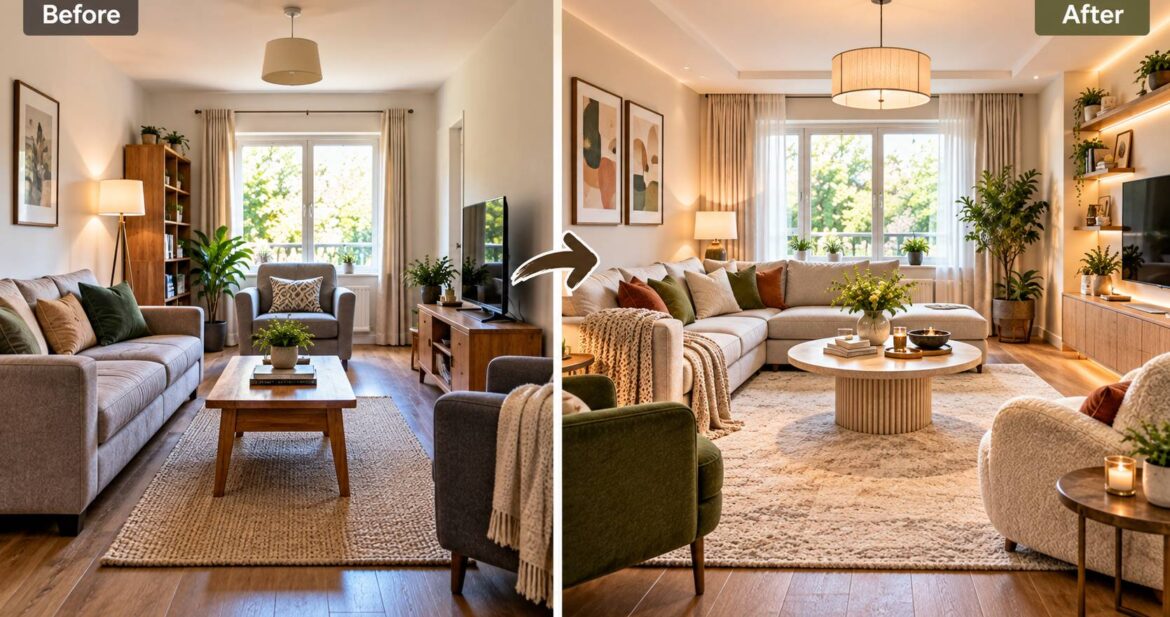
Furniture does more than fill an empty room. Where you place a sofa, dining table, armchair, bed, or storage unit can influence how spacious, comfortable, welcoming, and practical a room feels.
A room with attractive furniture can still feel awkward when pieces interrupt walkways, block natural light, or sit too far apart. In contrast, a thoughtful layout can make familiar furniture look completely different. Simple home transformations often begin by reconsidering how the existing space is being used rather than immediately buying something new.
Good furniture placement balances appearance with everyday function. The aim is to create a room that looks intentional while allowing people to move, relax, talk, work, and carry out everyday activities comfortably.
Start With the Purpose of the Room
Before moving furniture, decide what the room needs to do.
A living room used mainly for family evenings requires a different layout from one designed for frequent entertaining. A bedroom needs to feel restful, while a dining room should make it easy for people to sit down, move chairs, and walk around the table.
Ask yourself what happens in the space most often. Do people watch television, read, work, entertain guests, or spend time together? Once the main purpose is clear, furniture can be positioned around those activities.
This simple step prevents a common problem: arranging furniture because it looks good from one angle while ignoring how the room functions throughout the day.
Create a Natural Focal Point
Most successful rooms have somewhere for the eye to settle.
A focal point might be a fireplace, large window, piece of artwork, television, architectural feature, or attractive view. Furniture can then be arranged so that it supports rather than competes with that feature.
In a living room with a fireplace, for example, seating can face or gently angle towards it. If a window overlooks a garden, chairs may be positioned to enjoy the view instead of turning their backs towards it.
Not every item needs to face the focal point directly. The purpose is simply to give the layout a clear visual direction.
Keep Walking Routes Clear
Movement is one of the most important parts of room planning.
People should be able to enter and move through a room without weaving around tables, squeezing between chairs, or stepping around the edge of a sofa.
Think about the routes between doors, seating areas, windows, and adjoining rooms. Furniture should guide movement rather than interrupt it.
This is particularly important in open-plan homes, where placement can help define different areas without using physical walls. A sofa might separate a living area from a dining space, for example, while still leaving an obvious pathway between the two.
Avoid Pushing Everything Against the Walls
It can be tempting to place every piece of furniture against a wall, especially when trying to make a room appear larger.
However, this approach does not always produce the best result.
Moving a sofa or chairs slightly away from the walls can create a more comfortable and intentional seating arrangement. In larger rooms, floating furniture towards the centre can prevent the space from feeling empty or disconnected.
Thoughtful furniture placement can completely change how balanced and sociable a room feels. Even moving chairs so they face one another more naturally can make conversation easier and give the space greater purpose.
Arrange Seating for Conversation
Living rooms should generally make communication easy.
If chairs and sofas are positioned too far apart, guests may feel disconnected. If everything faces only a television, the space can feel less suitable for conversation.
Try positioning seating so people can comfortably see one another without having to turn sharply. A sofa facing two armchairs, or two sofas arranged opposite each other, can create a natural social area.
A coffee table or ottoman can help anchor the arrangement, but it should not create an obstacle between seats.
For larger rooms, several smaller conversation areas may work better than one oversized arrangement.
Use Furniture to Make a Small Room Feel Larger
Small rooms need careful planning, but that does not mean every piece must be tiny.
Too many small items can actually make a room look crowded. A few well-proportioned pieces often create a calmer result.
Look for furniture with visible legs, slimmer profiles, or multifunctional features. Keeping more of the floor visible can make the room feel lighter and less congested.
Creative furniture ideas can also help make compact rooms more practical. Pieces that provide storage, flexible seating, or more than one function can reduce the need for additional furniture.
The key is choosing pieces that suit the dimensions of the room rather than simply selecting the smallest available option.
Consider Scale and Proportion
Furniture needs to relate to both the room and the other pieces around it.
A large sectional sofa may dominate a compact room, while a tiny two-seater may appear lost in a spacious living area. The same principle applies to coffee tables, rugs, lamps, cabinets, and artwork.
Before buying or repositioning furniture, consider the visual weight of each item.
A substantial sofa may need a reasonably sized coffee table to balance it. A tall cabinet can look more natural beside other items with enough height or visual presence.
Maintaining proportion helps the room feel settled rather than accidental.
Let Natural Light Guide the Layout
Windows are valuable design features, so avoid blocking them unnecessarily.
Large pieces positioned directly in front of windows may reduce daylight and make the room feel darker. Where possible, use lower furniture close to windows so light can travel further into the space.
The direction of daylight can also influence where you create reading areas, workspaces, or seating zones.
An armchair beside a bright window may create a comfortable reading corner, while a desk can benefit from daylight if positioned carefully to reduce screen glare.
Making better use of natural light can change the atmosphere without changing the furniture itself.
Use Rugs to Define Different Areas
Rugs can help furniture arrangements feel connected.
In a living room, a rug can visually group the sofa, chairs, and coffee table into one clear seating zone. In an open-plan room, separate rugs can distinguish living and dining areas while maintaining an open feeling.
Size is important. A rug that is too small may make furniture appear disconnected. Ideally, it should relate clearly to the main pieces around it.
A well-positioned rug creates structure without adding walls or heavy furniture.
Create Balance Without Perfect Symmetry
A balanced room does not need to be perfectly symmetrical.
Matching chairs on either side of a fireplace can create a formal appearance, but asymmetrical arrangements can feel just as polished.
Visual balance comes from considering size, height, color, shape, and weight.
For example, a large sofa on one side of a room might be balanced by two armchairs and a substantial lamp on the other. A tall cabinet can be offset by artwork or shelving elsewhere.
Step back occasionally and look at the entire room rather than focusing on one piece at a time.
Leave Enough Space Around Furniture
Spacing has a major influence on comfort.
Dining chairs need room to pull away from the table. Sofas need enough clearance for people to walk past. Coffee tables should be close enough to reach without making seating feel cramped.
A room often feels more luxurious when furniture has breathing space around it.
This does not mean leaving large empty gaps everywhere. The goal is comfortable spacing that allows each piece to serve its purpose while keeping the room easy to navigate.
Think About Doorways and Views
When entering a room, the first view matters.
Try not to place the tallest or bulkiest furniture directly in front of the entrance unless the layout requires it. Seeing the back of a large wardrobe or sofa immediately upon entering can make a room feel restricted.
Instead, position lower or more attractive furniture where possible so the eye can travel further into the space.
Also consider what people see while sitting down. A comfortable chair becomes more appealing when it faces a garden, artwork, fireplace, or attractive part of the room rather than a cluttered storage area.
Experiment Before Buying More Furniture
One of the easiest ways to refresh a room costs nothing.
Move the furniture you already have.
Try rotating the sofa, moving a chair to another corner, swapping side tables, or removing one unnecessary piece. Even small changes can reveal a layout that works better.
If you are planning to buy new furniture, use masking tape to mark its dimensions on the floor first. This gives a much clearer idea of how much space it will occupy and whether people will still be able to move comfortably.
Planning before purchasing can prevent expensive mistakes.
Frequently Asked Questions
How does furniture placement affect a room?
Furniture placement affects movement, comfort, visual balance, conversation, natural light, and how large or small a space appears. A good arrangement makes the room easier to use while creating a more organised appearance.
Should furniture always be placed against the walls?
No. Moving furniture away from walls can create more intimate seating areas and make larger rooms feel better connected. The best position depends on the room’s dimensions and purpose.
How can I make a small room feel less crowded?
Use fewer well-proportioned pieces, maintain clear walkways, choose furniture with slimmer profiles, keep windows unobstructed, and avoid filling every available corner.
What should I consider before moving furniture?
Consider the room’s purpose, entrances, windows, focal points, walking routes, lighting, furniture dimensions, and how people normally use the space.
Can rearranging furniture really change a room?
Yes. Changing orientation, spacing, and grouping can alter how open, comfortable, balanced, and practical a room feels without requiring new furniture or major renovation.
Conclusion
Furniture placement has a powerful effect on how a room looks and functions. The same furniture can make a space feel crowded and awkward in one arrangement but open, balanced, and welcoming in another.
Start with the room’s purpose, identify a natural focal point, maintain clear walking routes, and position seating so people can communicate comfortably. Pay attention to proportion, daylight, views, and the amount of breathing space around each piece.
Most importantly, experiment. Moving a sofa, changing the angle of a chair, or removing one unnecessary table may be enough to transform the entire atmosphere. Good room design is often less about owning more furniture and more about placing what you already have in the right way.






Leave a Reply
You must be logged in to post a comment.