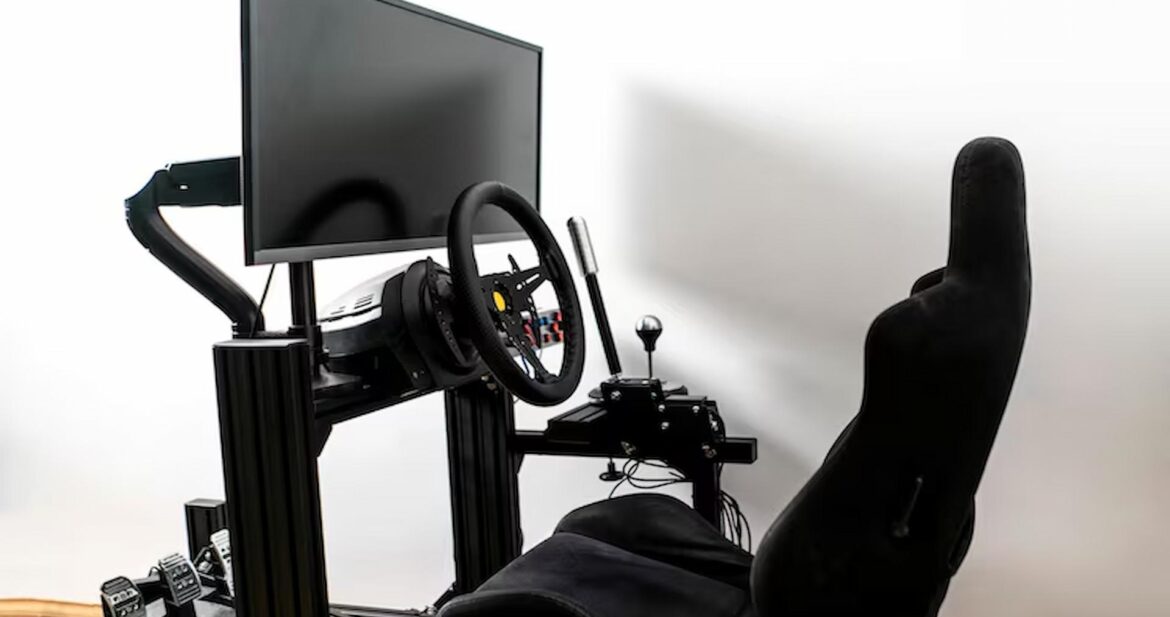
Choosing the right sim racing setup can dramatically influence your driving experience. Entry-level rigs offer accessibility and affordability, while advanced systems deliver greater realism and control. Understanding the differences helps racers make smarter upgrade decisions and build a setup that matches their skill level, goals, and commitment to virtual motorsport.
Sim racing has grown into a serious motorsport simulation where equipment quality can significantly influence performance and immersion. For newcomers, entry-level setups provide an accessible starting point, while experienced drivers often move toward advanced systems that deliver higher precision and realism.
Many racers exploring mid-to-high performance setups often consider configurations built around the Moza R9 bundle, which bridges the gap between beginner equipment and professional-grade simulation hardware. Understanding the differences between entry-level and advanced setups helps drivers choose equipment that suits their needs, budget, and long-term goals.
This comparison highlights how these two categories differ in hardware capability, driving experience, and overall value.
Understanding Entry-Level Sim Racing Setups
Entry-level sim racing setups are designed to introduce players to virtual racing without requiring a large financial investment. These systems prioritise simplicity, ease of installation, and accessibility.
Most entry-level configurations include a steering wheel, pedal set, and a desk-mounted stand. They typically rely on gear-driven or belt-driven force feedback systems that simulate resistance when turning the wheel.
While these setups are less powerful than advanced systems, they still provide a solid racing experience for beginners.
Common Features of Entry-Level Setups
- Compact design that fits easily into home gaming spaces
- Lower torque steering wheels for comfortable control
- Simple pedal systems with basic brake resistance
- Quick installation without complex rig assembly
- Affordable price range suitable for beginners
These systems allow drivers to learn racing fundamentals, including braking points, steering control, and racing lines.
The Limitations of Beginner Equipment
Although entry-level systems provide an accessible introduction to sim racing, they also come with certain limitations that become noticeable as drivers gain experience.
Lower-power force feedback often reduces the amount of detail a driver can feel through the steering wheel. Subtle cues such as tyre grip changes or road surface textures may be less pronounced.
Pedal systems at this level also tend to rely on simple spring mechanisms rather than pressure-sensitive braking systems. This can make it harder to apply consistent braking during intense races.
Common limitations include:
- Reduced steering torque and feedback detail
- Basic pedal mechanisms with limited pressure control
- Plastic construction that may feel less durable
- Limited upgrade options within the same ecosystem
For casual players these drawbacks may not matter, but competitive drivers often look for more advanced equipment as their skills improve.
What Defines an Advanced Sim Racing Setup
Advanced sim racing setups focus on realism, precision, and durability. These systems are designed for drivers who want the closest possible simulation experience.
The biggest difference lies in direct-drive wheel technology. Instead of using gears or belts, direct-drive wheels connect the steering wheel directly to a powerful motor. This produces stronger and more accurate force feedback.
Many competitive racers upgrade to hardware platforms centred around systems like the Moza R9 bundle, which offer significantly greater torque and improved feedback clarity compared with entry-level wheels.
Advanced setups also typically include load-cell or hydraulic pedals that measure braking pressure instead of pedal movement. This allows drivers to control braking more accurately.
Key Components of High-End Sim Racing Systems
Advanced rigs usually combine multiple specialised components designed to maximise realism and control.
Direct Drive Steering Systems
Direct-drive motors provide detailed feedback that replicates tyre grip, steering resistance, and road texture more accurately.
Professional Pedal Systems
Load-cell pedals measure braking force rather than pedal distance, improving braking consistency during races.
Dedicated Racing Cockpits
A rigid cockpit frame holds the wheel, pedals, and seat in a stable driving position, preventing movement during intense racing sessions.
High-Resolution Displays or Triple Screens
Many advanced setups use triple monitors or ultrawide displays to expand the field of view and improve situational awareness.
These components work together to create a highly immersive racing environment.
Performance Differences on the Virtual Track
The difference between entry-level and advanced setups becomes most noticeable during competitive racing sessions.
Entry-level equipment allows drivers to control the car effectively, but advanced setups provide more detailed feedback that helps drivers detect subtle changes in grip or balance.
For example, stronger force feedback can indicate when tyres are beginning to lose traction. This allows drivers to react earlier and adjust their steering or throttle inputs.
Pedal upgrades also influence performance. Pressure-sensitive brake systems allow racers to apply consistent braking force, which is crucial when approaching corners at high speed.
Drivers using systems built around the Moza R9 bundle often experience smoother steering inputs and more accurate vehicle control, which contributes to improved lap consistency over time.
Cost Versus Value in Sim Racing Hardware
Budget considerations play an important role when choosing between entry-level and advanced setups.
Entry-level systems usually cost far less and provide a strong introduction to sim racing. For many players, this is the ideal way to begin learning driving techniques.
Advanced setups require a larger investment but offer long-term value through improved performance and durability.
When evaluating cost versus value, drivers should consider:
- How frequently they plan to race
- Whether competitive racing is a goal
- Available space for a dedicated simulator rig
- Future upgrade plans
Choosing equipment that supports gradual upgrades can make the transition from beginner to advanced setups easier.
Tips for Choosing the Right Sim Racing Setup
Selecting the right equipment depends on your experience level and racing goals. A thoughtful approach can prevent unnecessary spending and ensure the setup grows with your skills.
Consider the following tips before purchasing hardware:
- Start with your budget and space. Ensure the setup fits comfortably within your gaming area.
- Prioritise wheel feedback quality. Steering precision has the greatest impact on driving experience.
- Think about future upgrades. Choosing modular systems allows components to be replaced individually.
- Focus on pedal quality. Reliable braking control improves lap consistency.
- Balance realism with practicality. Advanced systems are impressive but should match your commitment level.
These considerations help drivers build a setup that supports both enjoyment and long-term skill development.
The Upgrade Path for Sim Racers
Many sim racers follow a gradual upgrade path rather than jumping directly into advanced systems.
A typical progression often looks like this:
- Entry-level wheel and pedal set on a desk mount
- Addition of a dedicated wheel stand
- Upgrade to stronger force feedback systems
- Installation of load-cell pedals
- Transition to a full racing cockpit with high-end hardware
Systems centred around the Moza R9 bundle often represent the stage where drivers transition from beginner equipment to a more competitive simulation environment.
This gradual approach allows drivers to build experience while upgrading hardware strategically.
In Conclusion
Entry-level and advanced sim racing setups serve different purposes within the growing world of virtual motorsport. Beginner systems provide an accessible entry point that allows drivers to learn racing fundamentals without major financial investment.
Advanced setups, on the other hand, focus on precision, realism, and long-term performance. Features like direct-drive steering, pressure-sensitive pedals, and stable racing cockpits create a more immersive and competitive experience.
For many racers, the journey involves progressing gradually from beginner equipment toward more advanced hardware. Configurations built around systems such as the Moza R9 bundle often represent a major step forward in performance and realism.
Ultimately, the right setup depends on individual goals, experience level, and commitment to the sport. By understanding the differences between entry-level and advanced systems, drivers can make informed decisions and build a sim racing environment that evolves alongside their skills.






Leave a Reply
You must be logged in to post a comment.